Pressmaster review extension
Conclusion
Pressmaster offers a comprehensive suite of tools designed to streamline content creation and management. Its features, such as Trendmaster and Supernova, provide thoughtful and practical solutions for content inspiration and repurposing. While some tools like Twin and Accelerator are more niche and strategy-oriented, they add depth to the ecosystem. However, the platform could benefit from more direct integration with social media and a more visually engaging interface. Overall, Pressmaster is a solid choice for those looking to consolidate their content workflow within a single ecosystem.
Pros
- Thoughtful and personalized content suggestions with Trendmaster
- Effective content repurposing with Supernova
- Unique brand development features with Twin
- Structured research and content storage with Pins
- Comprehensive strategy and growth planning with Accelerator
Cons
- Lacks direct social media scraping in Pins
- Some features may be too niche for daily use
- Newsroom could be more visually engaging
Table of Contents
Trendmaster
I didn’t conduct an in-depth test of Trendmaster, but I explored its functionality and features. It doesn’t simply display random viral topics; it starts by asking for your interests, which I found to be a thoughtful touch. This made the experience feel more deliberate rather than chaotic.


After selecting preferences, it presents trending topics across various categories such as tech, business, entertainment, and more. The layout appeared organized and uncluttered, allowing me to scroll without feeling overwhelmed.
It isn’t a complex analytics dashboard filled with graphs. Instead, it resembles a curated inspiration tool. I didn’t use it to produce complete content, but I can see how it could be useful when facing writer’s block or planning ahead. It felt more like a guided resource than an automated generator.
Supernova
I didn’t delve too deeply into Supernova, but I tested its core feature. It’s primarily designed for content repurposing. When I pasted a URL, it began restructuring the content into different usable formats.
It didn’t merely summarize; it reorganized the content in a deliberate manner, almost like transforming a single long piece into a structured series, which I found quite appealing.
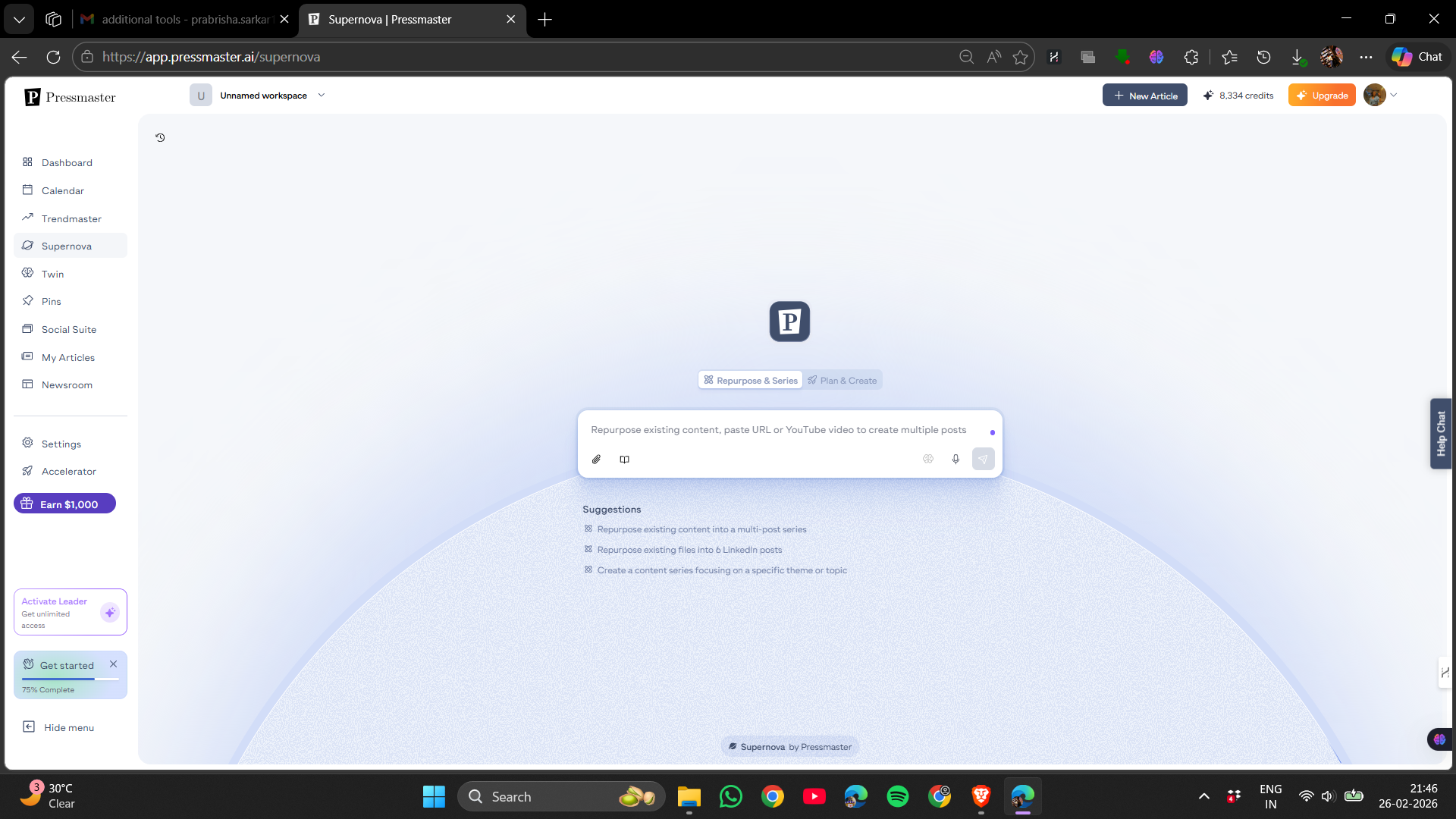
It appears designed for those who already produce long-form content and want to adapt it for various platforms. I didn’t conduct extensive testing, but from what I observed, it didn’t seem like lazy rewriting — rather, it felt practical.
Twin
Twin was arguably the most conceptually unique feature. I didn’t fully train it or use it extensively, but I explored its functionality.

It maps out the core identity of content, including values, reasoning style, areas of expertise, and positioning. It’s less focused on creating individual posts and more about shaping how content reflects a person’s or brand’s thinking. Initially, I didn’t fully understand it, but as I explored further, I realized it’s intended for long-term brand development.
There’s also an option to chat with Twin, which allows for refining or providing additional input regarding voice and perspective. I didn’t explore this feature extensively, but the concept felt distinct from typical writing tools.
Pins
Pins functions as a space for content storage and research. I uploaded links to see how it handles external material. It summarizes content and extracts key ideas.
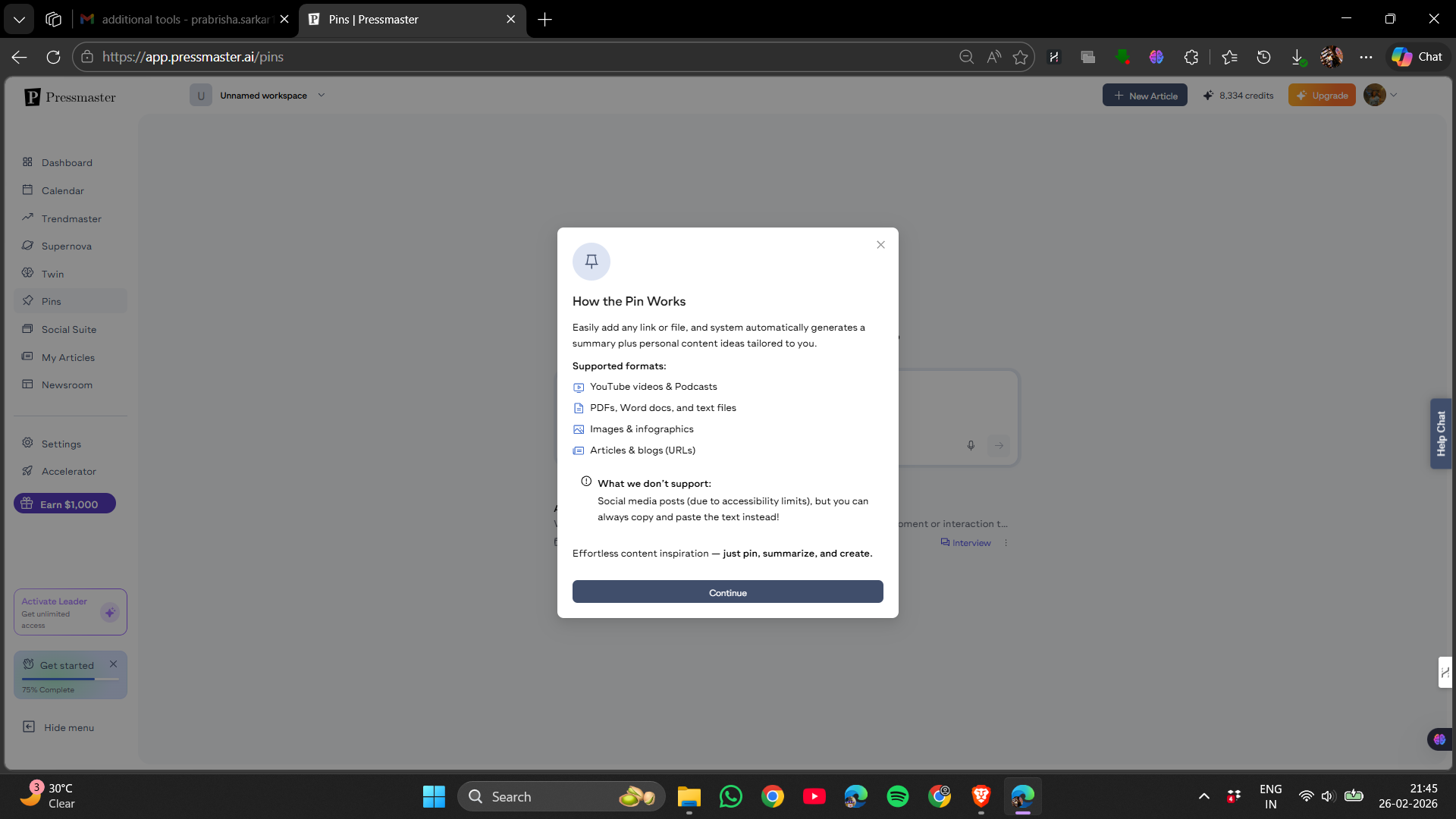
I didn’t test every possible format, but from what I observed, it acts as a structured research vault rather than just a collection of random bookmarks.
It doesn’t support direct scraping of social media posts, which would have been a useful addition. However, for organizing links, PDFs, and YouTube content, it appeared functional. It’s not flashy, but it’s practical.
Accelerator
Accelerator appears to be more strategy-oriented. I didn’t run a full campaign through it, but I examined its structure.

It offers guided workflows and frameworks designed for content growth and distribution. It’s less about creating individual posts and more about building momentum.
Based on my impression, it seems somewhat more advanced than the other features. Not something I would use daily, but for strategic growth planning, it appears quite useful.
Newsroom
Newsroom resembles a website-building environment rather than just a content repository. Visually, it seems tailored for creating structured pages such as homepages, landing pages, or even a full content hub. It gave off slight WordPress-like vibes, but more integrated within the Pressmaster ecosystem. I didn’t publish or build anything myself, so I can’t assess its full capabilities. However, from the layout and options, it appears designed to organize content into a public-facing site rather than just drafts. It feels more like a launchpad than a traditional editor.


It seems Pressmaster aims to keep all content within a single ecosystem rather than scattered across various tools. While not visually the most exciting feature, it effectively consolidates everything.
Frequently Asked Questions
Trendmaster is a feature within Pressmaster that curates trending topics based on your interests. It starts by asking for your preferences and then presents trending topics across various categories like tech, business, and entertainment. It is designed to feel more like a guided resource than an automated generator, helping with writer’s block or planning ahead.
Supernova is designed for content repurposing. When you paste a URL, it restructures the content into different usable formats. It doesn’t just summarize but reorganizes the content in a deliberate manner, making it useful for adapting long-form content for various platforms.
Twin is a unique feature that maps out the core identity of content, including values, reasoning style, areas of expertise, and positioning. It is less focused on creating individual posts and more about shaping how content reflects a person’s or brand’s thinking. It also allows for refining or providing additional input regarding voice and perspective through a chat feature.
Pins functions as a space for content storage and research. It summarizes content and extracts key ideas, acting as a structured research vault rather than just a collection of random bookmarks. It supports organizing links, PDFs, and YouTube content, making it practical for research purposes.
Accelerator is more strategy-oriented compared to other features. It offers guided workflows and frameworks designed for content growth and distribution. It is less about creating individual posts and more about building momentum and strategic growth planning.
Newsroom resembles a website-building environment and is tailored for creating structured pages such as homepages, landing pages, or even a full content hub. It is designed to organize content into a public-facing site rather than just drafts, acting as a launchpad within the Pressmaster ecosystem.
Pressmaster offers a range of features that can be useful for daily content creation and management. While some features like Accelerator may be more suited for strategic planning, others like Trendmaster and Supernova can be used daily for content inspiration and repurposing. It aims to keep all content within a single ecosystem, making it practical for regular use.
Abonneer je op onze nieuwsbrief en ben als eerste op de hoogte van tijd- en geldbesparende AI-tools!
Comments